Monday, September 04, 2017

A Story About Fixing a Nintendo Switch Joycon (31Aug2017)

Late this Thursday afternoon on 31Aug2017 my son, Orlando, shared some 'bad news' with me.. he inadvertently dropped his brand new Nintendo Switch and broke the left joycon.

Lando said he stressed out about this for hours and finally just decided to tell me about it.  After stressing out for hours (according to Lando), he finally notified me about it around 4pm today.  I stated to him that I would look at it after I made up several hours of work in my home-office today. In the mean time, I suggested to Lando that he conduct research in YouTube and Google to look for videos on how to fix it. Later in the day when I was finally done with work around 7pm, I asked him to show me what he found online. In his several hours of research, Lando discovered that it was fixable.  That was good news to hear.

Lando, said he watched several videos on how to fix the NIntendo Switch joycon.  So I told him, let's see how much a replacement costs and then try to fix it.  ("attempt to fix vs. buy replacement decision")  The replacement joycon costs $49.99 on Amazon.  In Lando earnings, that is about 2-weeks of yard work.  So I said let's try to fix it since we have nothing to lose and much to potentially gain.

We then started taking the joycon apart and trying to fit it. The videos instructions were a tremendous time saver. Fortunately, the issue was just figuring out how to take the joycon apart and then reconnecting the two ribbon cables that somehow became disconnected.

I have to say that the internal design of the Nintendo Switch joycon is pretty impressive.  I've fixed many electronic gadgets in my lifetime and have to admit that Nintendo really has some good designers.  What I was most impressed with are the micro connectors and ribbon cable locks.. The molded plastic and circuit board designs fit and finish were very clean fitting and precise.

I showed Lando some tricks with magnetizing precision screwdriver heads (temporarily) to assist with micro screw management.  A really good tip because I've lost several of those tiny micro-screws used in so many electronic gadgets over the years.   After spending 1.5 hours on this, we successfully figured it all out, fixed the joycon, and verified that is is working as expected!!!!

During this time, I was able to share a lot of troubleshooting wisdom and my experience with fixing things. I told Lando that trying to fix something takes a lot of time and patience, but is worth it if you succeed.  Even if you do not succeed, you can learn something about the design of the gadget which may help you in the future the next time you are trying to fix something.  This experiential endeavor helps you with designing new things later.

I thought I would share this story with you this since this is the first time I have worked 'collaboratively' with my son, Lando, to fix a very expensive new electronic gadget which was Nintendo Switch was less than 2-weeks old as of today.  think he was more motivated to fix it and make it right since he bought it with his own hard-earned money.

What surprised me is how Lando has really matured when it comes to electronics and troubleshooting.  His experience with being on the Hickory High School Robotics Team and hanging out with the 'geeks' has really paid off in the last year.  I am very proud of his abilities and very optimistic about him in the future as he starts getting into computer engineering or robotics or computer science or whatever he decides to do in college.  As parents, I feel that Linda and I have raised a very smart young man with a very bright future ahead of him.

Lando told me after we fixed the Nintendo Switch joycon that he was glad he decided to tell me about it and ask for help.

.... Just wanted to write this down since it was one of those life experiences as a Dad that I will always remember and I'm quite sure will be imprinted on my son's psyche.

20170904

I haven't posted to this blog in roughly four years.  Where has all the time gone?  I've had quite a bit of time to think about life and everything software and finally feel that I've got more to say in the web log format.

Wednesday, October 23, 2013

U.S. Army is going Google!

To improve efficiency, collaboration, real-time communication, and most importantly to cut costs the U.S. Army is​ modernizing into the cloud with Google Apps.  See "U.S. Army to cut costs, improve collaboration and go mobile with Google Apps".  This is smart strategic move to the mobile future.

The Army even setup a private Google Play are to distribut mobile apps internally.
"The Army anticipates rapid adoption of Google Apps because many Soldiers and Army personnel already use Google Apps in their personal lives. Gmail and Hangouts, for example, are popular ways to keep in touch with friends and family while deployed. Google Apps also enables seamless and high fidelity interoperability in their existing work environment with Google Quickoffice.

...Google Apps runs on multiple operating systems and browsers providing more device options, plus works with existing Army security policies and DoD directory and authentication services. Google’s completion of FISMA certification and accreditation gave the government a complete understanding of the security controls Google Apps has in place and how they meet the Army’s stringent criteria."

Monday, April 08, 2013

Apache Struts 1 End-of-Life (EOL) Announced


The Apache Software Foundation announced on Friday (05Apr2013) that the Struts 1.x web framework will no longer be officially supported.  It has reached End-of-Life (EOL) status.  I saw this announcement originally in this InfoQ article, “Struts 1 Reaches End of Life”.

Started in 2000 to create an improved development experience over pure Java Server Pages (JSP) utilization, Struts 1 soon became the de-facto standard for Java-based web application development. Numerous companies adopted Struts 1 as a strategic platform and stayed with it even after JSF was introduced as a standardized Java EE framework for web application development. In the early 2000s, most job offerings in the space of Java-based web technology came with Struts 1 as a must-have skill. Even nowadays many important web sites and web based user interfaces rely on Struts 1 technology. It is furthermore remarkable that many later introduced web frameworks such as Spring MVC or WebWork were crucially inspired by Struts 1.

Struts 1 was cutting edge Java technology back in 2000 when it was originally released.  It paved the way for MVC frameworks and made J2EE development bearable.  I am glad to see the Struts team officially focusing on Struts 2 and beyond as they have been doing in the past few eyars.  As stated in the Apache announcement, Struts 1 has not been updated since December 2008 so this EOL announcement was inevitable.

Monday, March 11, 2013

Chrome OS and Chromebooks are Unbreakable in 2013


I am still using my Cr-48 daily as my goto kitchen-table-top/counter-top device since Google sent me one back in December 2010 to test in their beta program.  In the recent Pwn2Own and Pwnium3 hacking competitions Chrome OS appears to be unbreakable.  "Linux triumphant: Chrome OS resists cracking attempts".  This is the primary reason why I like my Chrome OS so much.  It is inherently designed as a simple and secure cloud-based OS that is very difficult to break.

Based on these recent events and how well Chrome OS has survived, you get a warm-and-fuzzy feeling knowing that using a Chromebook is more secure than any other operating system that I know of today.  In my gadget infested existence today, I know that I use all these operating systems daily: Windows, Mac, Linux, Android, iOS, and ChromeOS.  Knowing that ChromeOS is so rock solid and near unbreakable gives me a really good feeling.

Chromebooks have been getting a lot of press the last few months also due to positive reviews of recent devices released into the market.  Linus Torvalds has been posting quite a bit on Google+ about his new Chromebook Pixel these past few weeks.  In addition several articles such as "Linus Torvalds really likes Google's Chromebook Pixel" acknowledge his viewpoints.  On a related side note, I am quite surprised how well my Cr-48 has stood the test of time and abuse being used around my house. 

Scrum Is The Most Populate Agile Method in 2013


Scrum is the most popular agile methodology for software development in 2013.  Scrum currently appears to be the most popular agile methodology since is relatively easy to implement. According to the VersionOne State of Agile Survey 2011, Scrum is used in more than two-thirds of agile projects which appears to be the  trend for the last few years.

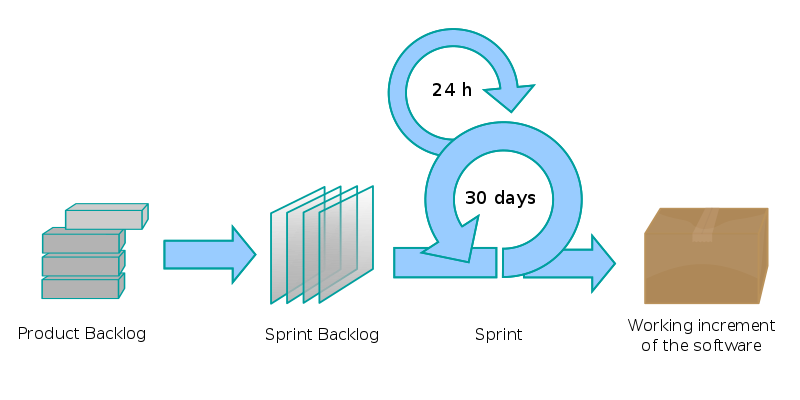
In the Scrum methodology, a sprint is the basic unit of development as depicted in The Scrum process.    A sprint generally is a one to four week development iteration. Planning in Scrum is prescribed as a one to four hour intense but time limited endeavor.  (The Scrum Framework in 30 Seconds)

The Scrum process  (Source: http://en.wikipedia.org/wiki/Scrum_(development))

Scrum embraces the intent and spirit of the Agile Modeling (Ambler) approach. In order to avoid the big-design-up-front (BDUF) trap, Scrum places a time constraints (e.g., daily, weekly, 30-day) on its sprints.  Having spent many years researching and applying information technology, the one common denominator with all successful implementations of an agile methodology has always been the people or peopleware as coined by Tom DeMarco as I also like to call it.  In other words, the right people at the right time (peopleware) matter more than the agile methodology selected.

Agility in 2013


Agility is a popular buzzword today in the software development, systems engineering, and project management communities.  Agile approaches for software development have actually been around for a while now.  In its most recent incarnation, it is safe to say about 10-12 years or so depending on where you look for a historical background on modern agile techniques.

One aspect that I have noticed lately is that the term being agile is becoming overloaded, de-sensitized, and is losing its meaning.  At least in how I see it used in various forms.  I started to  write several articles on agility to elaborate on a very specific type of software development agility called test-driven development or TDD.  This approach is not the most popular agile methodology but is very effective and attains productivity, quality, and speed to delivery gains in my experience.

Thursday, January 31, 2013

PMBOK Fifth Edition

PMI recently published the Fifth Edition of Project Management Body of Knowledge (PMBOK).
The PMBOK 5th Edition includes a new Knowledge Area for Project Stakeholder Management and four new planning processes.  The PMBOK has been updated with the most current knowledge and practices in project management.

If you are a PMI member, a complimentary "PMBOK Guide - Fifth Edition" is available as a secure PDF at Library of PMI Global Standards.

Java SE 6 Final Public update from Oracle, Forces Update to Java SE 7


Way back in February 2011, Oracle announced the End of Public Updates for Java SE 6 products which originally would have been in July 2012.  Well that has been extended two times to November 2012 and now February 2013.

Oracle announced in early December 2012 in a blog post that they will end public support for Java SE 6 after 19 February 2013.  This means that after 19 February 2013, all new security updates, patches and fixes for Java SE 6 and Java SE 5 will only be available through My Oracle Support and will thus require a commercial license with Oracle (in other words a paying customer).  In a related article released today 01/31/2013 concerning Java SE 6 retirement (Oracle Will Stop Providing Security Updates for Java 6 Next Month), it clarifies a point that the original Oracle blog post did not mention.  Oracle plans to start pushing JRE7 to existing customers automatically via Java Updates as announced in “Java 6 Auto-Update to Java 7 FAQ”.  Note that the auto-update to JRE7 only affects Windows systems.

Ready or not, you will have to consider updating to Java SE 7 within the next month or so.  At a minimum for Java security and open source licensing considerations.  If you are on the Linux/Unix platform, OpenJDK is an excellent alternative JRE/JDK to consider.   It works fine with Eclipse IDE in my experience.  Too bad, Apache Harmony is not up to par with the Sun/Oracle/OpenJDK feature set.  This would have been another alternative JRE/JDK option.

At any rate, you just need to be aware that public Java SE 6 support from Oracle has been on the chopping block for some time and will eventually take place.  Upgrading to Java SE 7 should be on your plans for your future Java systems configuration beyond February2013.

Saturday, September 01, 2012

JavaFX 2 for 2012 and beyond

I haven't posted to this blog in a while but I found a very interesting topic that just would not fit into the microBlogging format of the social media networks (Google+, Twitter), JavaFX 2.

A couple of days ago there were was an interesting article that caught my eye about JavaFX and Game development at Java Code Geeks, JavaFX 2 Game Tutorial Part 5.  After reading it, I spent some time researching JavaFX and learned that version 2 is now pure Java (not JavaFX Script), I see that JavaFX is beginning to gain mindshare and traction for rich client applications and rich internet applications (RIA).


Up to this point in time since JavaFX 1 was released back in 2007, it was just a bunch of background noise in the rich internet client/Java ecosystem. I mostly ignored JavaFX 1 after discovering that it is implemented in yet another scripting language, JavaFX Script. We already have Javascript, ActionScript, and HTML5 which all used some derivative of Javascript. So it made no sense to me to learn yet another scripting language.


JavaFX 2 was released in Oct 2011 with the its signficant change being it is now a 100% Java API.  I was not aware of this until a few days ago... again, background noise in the Java universe.  JavaFX 2.1 was released in April 2012.  The latest release, JavaFX 2.2 was released in August 2012, see What’s new in JavaFX 2.2.


JavaFX 2 is an integral API of Java 7 and is available as a runtime or SDK for Java 6 only on Windows. This in interesting. If you read between the lines of the Oracle JavaFX announcement, they want you to upgrade to Java 7 anyway so this is one hook to get developers to make the move.

After reading the 5 parts of the JavaFX Game Tutorial 6-part series, what is even more interesting is the JavaFX vs. HTML5 for RIA article published in May 201 providing a compelling argument for adopting JavaFX 2 for RIA applications in 2012 and beyond.  It provides a brief comparision with HTML5, Adobe Flash/Flex, Siverlight, and other Java web frameworks supporting RIA.


Now back to JavaFX, a good starting point in the JavaFX path  is the Hello JavaFX 2.0: Introduction by Command Line.

So why even look at JavaFX?  It is most likely the successor to Swing.  It goes above and beyond what Swing offers supporting multi-touch, forthcoming mobile support (iOS, Android), and Rich Client and Rich Internet platforms. This is discussed in more detail in the Integrating JavaFX and Swing article.

Friday, January 20, 2012

Security Enhanced (SE) Android Released

In early January (January 6, 2012) the US National Security Agency (NSA) released the first public ​version of Security Enhanced (SE) Android.  This past week, more articles mentioning it were published such as "NSA Releases SE Android With Better Sandboxing, Access-Control Policies".

SE Android is based on SE Linux (originally released back in 2000) and implements stricter access-control policies and sandboxing.  Applications, processes, and applications are now isolated from each other.  File-level permissions and and individual locking/encryption has been enabled.


News has been circulating for months that the U.S. Army is planning on using Android devices and the first device using SE Android, Dell Streak 5, received accreditation and approval by DISA in October 2011,  "First Android device certified for Pentagon personnel".  The government-issue Streak 5 also includes DISA-approved security provided by Good Technology’s Mobility Suite.

Sunday, January 01, 2012

Passive Solar (Photovoltaic) Tracking Systems

While doing more research on solar power systems recently, I discovered the ZomeWorks Track Rack system.  This is a passive PV tracking system that works based on solar heating of liquid inside the rack systems.  There are no complex electronics involved in this very simple design which is described at How ZomeWorks Trackers Work.  The ZomeWorks Track Rack system supports from two solar panels up to twelve and are priced accordingly.

ZomeWorks states that their passive PV tracking system can improve solar efficiency by 25%-40% over a static mounted PV system.  This is impressive.  They also have a few reference articles that have reviewed their designs in their Applications page.  The "To Track... Or Not To Track", HomePower Jun-Jul 2004 article contains an excellent review and overview PV tracking systems (passive, active) and explains how they work in more detail.  The article mentions doing a site survey using Solar Pathfinder device (available for $299) and available software (available for $189) which will evaluate specific locations for this solar potential.

Passive PV tracking systems are more reliable, have fewer components, require very litle maintenance, less accurate in cold/winter months, and are less expensive.  Active systems have electronic components and motors that increase their accuracy, maintenance, and cost.  So the trade-off in accuracy vs. costs and improvement in PV efficiency would require some type of decision analysis (break-even analysis) or other method to determine which one is better for your particular PV application.

Thursday, December 29, 2011

Solar Experimentation 2011

Earlier this year I found a portable solar power company, Goal Zero, that designs and distributes very practical portable solar panels.  They use super efficient monocrystalline photovoltaic cells which are the best on the market today.  I bought one of their kits from Amazon, Guide 10 Plus Adventure Kit + 4 AA batteries, after doing a lot of research and tested it while on vacation in summer 2011.  The Nomad 7 solar panel works as advertised.  It charges AA/AAA batteries with the Guide 10 device, and directly charges my Android phone, iPod, Nintendo DS, Nook Color, and all portable small devices that can use the built-in USB interface.

So on 17 December 2011, while out X-mas shopping my sister called me and said CostCo has some GoalZero solar gadgets on display.  So I serendipitously saw Goal Zero display at my local CostCo store.  This was a special event for the X-Mas 2011 that had many more of the Goal Zero products.  I was able to physically touch and inspect many of their products. The quality of their solar panels and designs are excellent.  I was really surprised at how small and light the Boulder 15M panels are.  The Boulder 15M mono-crystalline solar panels are 17-18% efficient which is really impressive.  See the GoalZero Learn page for details.  I ended up buying an additional Nomad 7 solar panel, a Scout 150 Power Pack, two Boulder 15M panels, and a Luna light on 12/24/2011.

After making the impulsive purchase, I started testing the Scout 150 with the two Boulder 15M solar panels chained for total of 30W of solar panels.  Given the time of year, this equipment has been performing as expected.  I attained a 60% on a sunny day (6-hours of quality sunlight) in late December (12/28/2011) which has the poorest quality of sunlight of the solar year.  Based on my observations, a 100% charge of the Scout 150 Power Pack would require about 10-hours of quality sunlight in Dec/Jan.  I can see getting a 100% charge from the solar panels in May-July which has much better solar radiance at our geo-location.

As a side note, I have been able to keep my Chromebook and Acer netbook (AAO L110) off-grid for 3-days in a row and recharging (not to 100% though) them both from the Scout 150 Power Pack.  This has been quite a fun time for unplanned solar experimentation.

Interestingly, this inspired me to start planning and scaling up to a self-designed solar power storage system with much more capacity. I saw some Kirkland deep cycle batteries while at CostCo for really good prices.  Approximately $63 for 85aH and $83 for 115 aH marine deep cycle batteries.   According to my research on the Kirkland batteries are made by Interstate which is an excellent battery manufacturer.  My next experiment dubbed Winter2012, will be a fun learning experience with the science and engineering of solar power and power storage.

Monday, December 12, 2011

IBM Open Sources Its EGL Technology

On December 8 2011, IBM open sourced their Enterprise Generation Language (EGL) technology and has donated the technology to the Eclipse Foundation.  Here is the developerWorks blog announcement, “The open era for EGL begins today”.  See the new Eclipse EGL Development Tools page.  Prior to the new Eclipse EGL project, EGL was released as the Eclipse-based Rational Business Developer suite.


EGL (Enterprise Generation Language) is a high level, modern business oriented programming language, designed by IBM to be platform independent. EGL is similar in syntax to other common languages so it can be learned by application developers with similar previous programming background. EGL application development abstractions shield programmers from the technical interfaces of systems and middleware allowing them to focus on building business functionality. EGL applications and services are written, tested and debugged at the EGL source level, and once they are satisfactorily functionally tested they can be compiled into COBOL, Java, or JavaScript code to support deployment of business applications that can run in any of the following environments:
 This is a welcome tool addition to the continuously evolving open source Eclipse ecosystem.  

Sunday, October 30, 2011

Reclaiming 15 minutes every day

The ZDNet blog, If Forrester likes Macs for IT today, they’ll love Chromebooks tomorrow , hits it right on the money. Highly Empowered and Resourceful Operatives or HEROs are really the types of people that are migrating to the instant on computing experience.

It's all about the 'boot time' reclaiming that 10-15 minutes first thing five times a week first thing in the morning. The 8 seconds to cold boot a Chromebook and instantaneous wake from sleep are the primary reasons I like it. That is roughy one hour of time weekly gained and countless hours of increased productivity due to getting online and starting my mental work when I am ready and not waiting for when my computer is ready. As a high-output high-productive user this is all the difference in world.

Sunday, October 23, 2011

Back after a few months in the Google+ Realm

I've been playing in the Google+ space since I joined it back in June when it was invitation only. Since then I have really slacked off on posting anything to my blogs. I have even almost stopped 'tweeting' and find myself spending less and less time on Facebook. Google+ I can say has become a place where I spend a lot of time not just lurking and doing nothing like I would do on Facebook, but actually having discussions on various subjects with people about topics that interest me.

I like the ability to be expressive in G+ with longer posts and the capability to add font effects and multiple links within a G+ post. This has long been an issue I've had with FB and Twitter. The 140-character limit in Twitter has always been a constraint that I have found frustrating at times and at other times a blessing when I was a at a lost for concise words. I think I like the balance that G+ represents which is be as expressive as you want or as concise as you want. Just be expressive.

I find that G+ has been replacing what and where I used to spend my time on the social media net (ex. Facebook, Twitter, etc..). What I have been experiencing these past few months can be summed up a 'new way' to spend my time on the 'social web' that blends research, socialization, technology, politics, techno-politics, local news, and news that interests me.

I have recently just realized a way to bring blogs back into my social web and the G+ experiment. It's taken a few months but now I think I see where blogs and G+ can and will coexist.

Sunday, July 24, 2011

Upgrading Removable Storage on Android Device

Upgrading your removal storage (microSD) on your Android is really easy. Just unmount, remove the microSD, copy all the files from the old card to the new microSD card, install the new card into your Android device. Android will detect the card and mount it automatically. Ignore the messages to format the card. You are done.

I just did this on my Android phone upgrading from the 2GB microSD card that come with the phone to a larger 8GB Sansdisk microSD card I had laying around. I copied the files from the old card to a local folder on my Mac, then copied the files onto the new microSD card. There is no proprietary DRM or other stuff on the removable storage that Android creates so is really straight forward. Good to know. This should also work on any Android tablet.

Friday, July 15, 2011

Google News Badges is something different

These kind of bring gaming to reading News, good strategy. See the Shareable News badges post. This kind of makes reading news a bit of a game for online news junkies.

Google+ First Impressions

I was provided a Google+ invitation in the first week of the Google+ launch. After activating my account and using it for the past week, I can say that this thing has potential. I really like the Circles features and how it is nicely integrated into my Google Docs and Android mobile phone. I think Google has finally developed a social networking product and applied its lessons learned form past failed attempts (Buzz, Wave) and even learned a few lessons from its competitors (Twitter, Facebook). Powering Google+ is Java on server-side, Javascript (using Closure framework), and some HTML5 on the client-side (Google+ Technological Details). For storage it uses BigTable and Colossus (Google Filesystem v2). The technical details are discussed here. The technology stack employed by Google+ definitely provides evidence based on scalability lessons learned from Twitter who started off using Ruby on Rails (RoR) for everything and has been spending the past few years migrating their server-side processes towards Scala (language that runs on a JVM) for performance reasons. Twitter still uses RoR for client-side but has since migrated its server-side infrastructure to Scala.

You can read about the Google+ ‘buzz’ (no pun intended) all over the web these past few weeks. The adoption rate is even at a respectable level, 10 million users in the past two-weeks (see Google+ grows to 10 Million Users). The question now is, can it become a viable social platform for all of Google’s apps and services. Based on what I have seen, I think yes. And the really important part is that Google is just starting to rev up its enterprise integration services leveraging Google+. This will be an interesting evolution to watch.

Wednesday, July 13, 2011

Google+ Technology

Behind the scenes of the recently launched Google+ project is Java, Javascript, and some HTML5 as per mentioned in the Google+ Technological Details article. Interesting that they use Java on the server-side, Javascript and HTML5 on the client-side. Google has learned some lessons from Twitter and Facebook on this implementation. They are also using BigTable and Colossus which is Google's real-time indexing system.